


Based on insights from Mathieu Tougas, Previous MSP Operation Director and CEO of Mizo
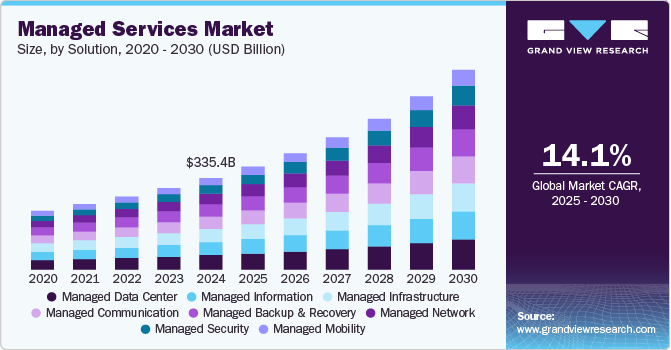
MSP industry is experiencing unprecedented growth. The global managed services market is projected to reach $335.4 billion by 2030, with a robust compound annual growth rate (CAGR) of 14.1% from 2025 to 2030. This explosive growth spans across all service categories—from managed data centers and security to network infrastructure and mobility solutions.
With increasing competition, growing client demands, and pressure to maintain healthy margins, MSPs face a critical challenge: how to scale effectively while keeping costs under control. The answer lies in understanding exactly where your team spends their time.
The Reality of MSP Growth
As MSPs grow, they inevitably encounter familiar growing pains. More clients mean more tickets, more technologies to manage, increased pressure on SLAs, and the need for more employees. While growth is positive, it often comes with hidden costs that can erode margins if not properly managed.
The industry statistics paint a sobering picture of current challenges:
- Each ticket reassignment adds roughly 1 hour and 46 minutes of extra work time on average
- Less than 35% of organizations have analysts with 3+ years of service, creating knowledge gaps
- Over 60% of companies admit to SLA breaches on a monthly basis
- Only 24% of ITSM professionals feel that existing best practices have kept pace with changing technology and business needs
These pain points stem from common issues: manual triaging processes, knowledge disparity among team members, long time-to-close metrics, and the fast-evolving nature of the technology sector. Tracking the right KPIs for MSP service desk performance helps pinpoint exactly where improvements are needed.
The Solution: A Four-Step Framework
To address these challenges, MSPs need a systematic approach to understanding and optimizing how their teams spend time. Here’s a proven four-step framework:
Step 1: Redefine Your Categories
The foundation of effective time management is having the right categorization system. Many MSPs struggle with categories that are too broad, too narrow, or simply not descriptive enough.
Key principles for category redefinition:
- Quality over quantity: Categories must be descriptive and easy to differentiate
- Start with 60-100 categories as a rule of thumb
- Root categories in your vertical: If you serve industrial clients or handle specific software, define categories that reflect your specialization
- Ensure no single category represents more than 30% of time spent
The goal is to create categories that are clear enough that any technician can easily distinguish between them, enabling accurate data collection and analysis.
Step 2: Create Meaningful Reports
Once you have proper categories, you need the right tools to analyze your data. Different tools serve different purposes:
- In-PSA dashboards: Quick and easy to implement, good for basic monitoring
- PowerBI: Much more versatile, allows for deeper analysis and custom visualizations
- Excel: More versatile than in-PSA tools but best suited for ad-hoc analysis
The key is ensuring your data meets the triangle of data quality:
- Accuracy: Is the information correct?
- Completeness: Is all necessary data present?
- Consistency: Is data entered the same way every time?
Step 3: Understand Where Time Is Spent
With quality data and proper reporting in place, you can begin meaningful analysis. Focus on identifying:
- Large categories: Any category representing more than 30% of time entries needs to be redefined or broken down further
- Variations and trends: Are you spending more or less time on certain tasks than previously?
- Client distribution: Are specific clients or sectors consuming disproportionate time in certain categories?
Watch out for warning signs:
- Inconsistent time entry practices across tickets
- Large time entry disparities for similar tickets
- Delayed or inaccurate time logging
Step 4: Apply Changes and Implement Quick Wins
Knowledge without action is worthless. Once you understand your time allocation patterns, implement these proven strategies:
Quick wins:
- Deploy automated ticket triage to ensure consistent ticket categorization
- Make documentation easily accessible directly from your PSA
- Increase ticket documentation through internal contests and incentives
- Train staff with priority focus on high-value categories
Process fixes:
- Weekly ticket reviews: Regular analysis of time allocation and improvement opportunities
- Identify repeat issues: Empower service leads to spot and resolve recurring problems
- Standardize your stack: Migrate customers to standard configurations and force upgrades when necessary
The Path Forward
Implementing this framework—combined with AI automation for MSPs—isn’t a one-time effort—it’s an ongoing process of continuous improvement. Start with redefining your categories, then build the reporting infrastructure to understand your current state. Use those insights to make targeted changes that will have the biggest impact on your efficiency and profitability.
Remember, the goal isn’t just to work harder—it’s to work smarter. By understanding exactly where your team spends their time, you can make data-driven decisions that allow you to scale your MSP while maintaining healthy margins.
The MSP industry will continue to evolve, but those who master the art of time management and cost optimization will be best positioned to thrive in this competitive landscape.
This article is based on insights from Episode 1 of our webinar series.
Related Articles
- The MSP Profitability Crisis Isn’t About Pricing: It’s About Time - The data-driven case for why 62% of technician time on routine tasks is destroying your margins.
- The 3 KPIs Every MSP Should Track to Stay Profitable - Track cost per ticket, utilization rate, and ARPC to boost profitability.
- Scaling Your MSP Without Scaling Your Headcount - The automation playbook for growing revenue without proportional hiring.