

The Question Nobody Wants to Ask
Every MSP owner thinking about AI automation eventually lands on the same uncomfortable question: What happens to my L1 techs?
It’s the elephant in the room during every demo, every sales call, every peer group discussion. You’ve built a team. Some of them have been with you for years. And now you’re looking at technology that can handle password resets, basic troubleshooting, and routine ticket triage faster than any human.
So what do you do?
The knee-jerk answer is simple: AI replaces L1, you cut headcount, margins improve. Clean and efficient.
But that’s not what we’re seeing. The MSPs actually deploying AI at scale are doing something different—and getting better results because of it.
The Real Problem Isn’t L1 Work. It’s What L1 Work Costs You.
Here’s what most MSP owners already know but rarely say out loud:
Your best technicians don’t want to spend their careers resetting passwords.
The average L1 tech handles 15-25 tickets per day. Most of those tickets are repetitive. Password resets. Printer issues. “My email isn’t working” (it’s working, they just forgot their password). VPN connectivity. The same problems, over and over.
This isn’t a training issue. It’s a structural issue. L1 work is necessary, but it’s also mind-numbing. And mind-numbing work creates three expensive problems:
1. Burnout. The technicians who actually care about their craft burn out fastest. They came into this industry to solve problems, not to be a human password reset button.
2. Turnover. Average technician turnover in the MSP industry runs 25-35% annually. Replacing a technician costs $15,000-$25,000 when you factor in recruiting, training, and lost productivity. Do the math on your own team.
3. Talent ceiling. Your best L1 techs should be moving to L2. Your best L2 techs should be moving to L3. But if everyone is buried in routine work, nobody has time to develop. The growth path doesn’t exist because there’s no bandwidth for it.
AI doesn’t solve the “L1 problem.” It solves the growth problem.
What Upskilling Actually Looks Like
Let’s be specific. When AI handles routine L1 tasks—triage, first response, password resets, basic troubleshooting—what do your technicians actually do instead?
Here’s what we’re seeing MSPs implement:
1. Accelerated L2 Training
The technician who was doing 20 password resets a day now shadows your senior engineers on complex network issues. Instead of theoretical training (“here’s how Active Directory works”), they get hands-on exposure to real problems while AI handles the routine queue.
Timeline impact: Technicians who would take 12-18 months to develop L2 skills are getting there in 6-9 months.
2. Client Relationship Ownership
Routine tickets don’t build relationships. But when a technician has bandwidth to actually talk to clients—to understand their business, anticipate their needs, flag potential issues before they become tickets—that’s when retention happens.
Some MSPs are restructuring roles entirely: instead of “L1 Technician,” they’re creating “Client Success Technician” positions where former L1 staff focus on proactive communication while AI handles reactive support.
3. Documentation and Knowledge Building
This is the unsexy one, but it’s critical. Most MSPs have terrible internal documentation because nobody has time to write it. When AI reduces ticket volume, technicians can actually document solutions, build runbooks, and create the knowledge base that makes everyone more efficient.
The compounding effect here is real: better documentation means AI gets smarter, which frees more time, which enables better documentation.
4. Specialization Paths
Not every technician wants to climb the L1 → L2 → L3 ladder. Some want to specialize. Security. Cloud infrastructure. Compliance. Automation.
When routine work isn’t consuming 80% of their day, technicians can actually pursue certifications, develop specializations, and become genuinely valuable experts rather than interchangeable ticket-handlers.
The Retention Math
Let’s make this concrete.
Scenario A: No AI, no upskilling
- 5 L1 technicians
- 30% annual turnover (industry average)
- $20,000 replacement cost per tech
- Annual cost: $30,000 in turnover alone
- Plus: burnt-out team, no growth path, constant recruiting
Scenario B: AI handles routine work, techs upskill
- 5 technicians (same headcount)
- AI handles 40% of ticket volume
- Techs focus on complex work + client relationships
- Turnover drops to 15% (engaged employees stay)
- Annual savings: $15,000 in reduced turnover
- Plus: developing talent pipeline, better client retention, scalable operations
The second scenario doesn’t just save money on turnover. It builds the team you’ll need to grow.
What This Means for Hiring
Here’s the part nobody talks about: AI changes who you hire, not just how you deploy existing staff.
When L1 work is automated, you’re no longer hiring for “can reset passwords and follow scripts.” You’re hiring for:
- Aptitude to learn
- Communication skills
- Problem-solving ability
- Client empathy
The barrier to entry shifts. You can hire someone with less technical experience but more potential, because the rote work that used to require months of training is now handled by AI. Your job becomes developing people, not just staffing positions.
This is a competitive advantage. While other MSPs fight over the same pool of experienced technicians, you can identify and develop talent that others overlook.
The Uncomfortable Part
Let’s be honest: not every L1 technician will thrive in this new model.
Some technicians genuinely prefer routine work. They like the predictability. They don’t want to develop client relationships or learn new skills. They want to show up, handle their queue, and go home.
That’s okay. But it means having real conversations about fit—conversations that should happen anyway.
The MSPs handling this well are:
- Being transparent early. Explaining to the team that AI is coming, what it will handle, and what the new expectations will be.
- Giving people choices. Some technicians will be excited about growth opportunities. Some will prefer to leave for a more traditional role elsewhere. Both are valid.
- Investing in transitions. If someone isn’t a fit for the new model, helping them find the right next step—whether that’s a different role internally or a graceful exit.
The worst approach is pretending nothing is changing. Your team knows AI is coming. They’re already wondering what it means for them. Silence breeds anxiety.
Go Deeper: Live Webinar on April 1
We’re hosting a live conversation on exactly this topic—what happens to your service desk when AI takes over the routine work, and how to build a team that scales with it.
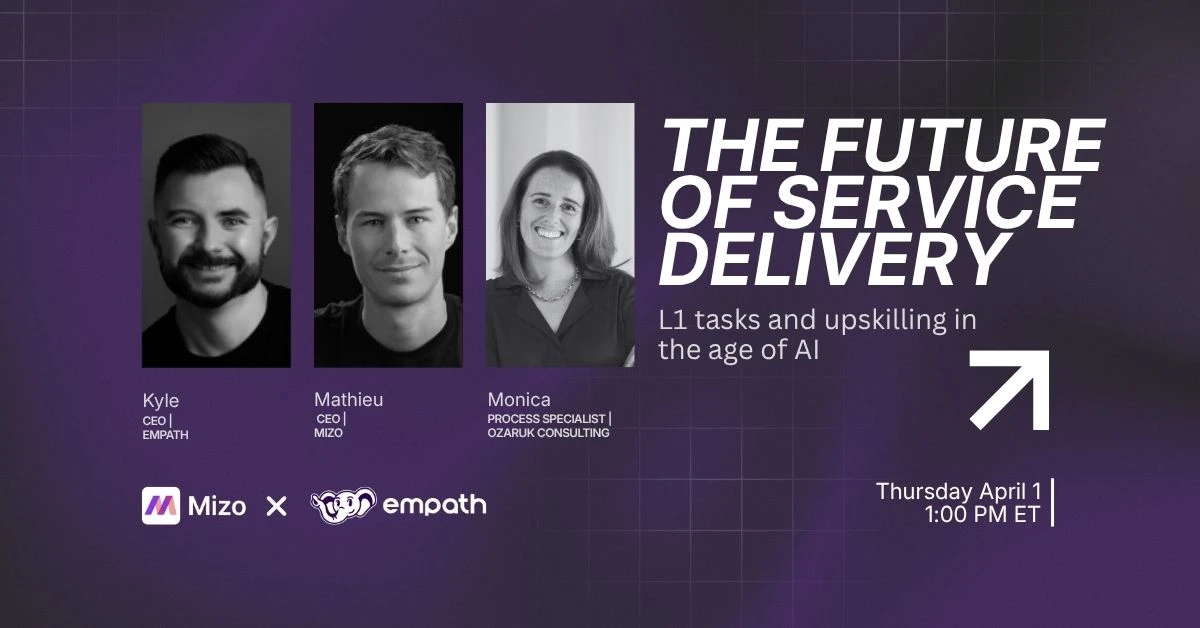
The Future of Service Delivery: L1 Tasks and Upskilling in the Age of AI
📆 Thursday, April 1 | 1:00 PM ET
Joining me will be:
- Kyle Christensen (CEO & Co-Founder, Empath) — former EOS implementer who’s helped thousands of MSPs achieve hyper-growth
- Monica Ozaruk (ConnectWise Consultant) — the operator behind the operators, helping MSPs turn PSA chaos into a growth engine
We’ll cover:
- How AI agents are redefining service desk tasks (with real examples)
- Strategies to upskill technicians and boost retention
- What’s actually working at MSPs deploying automation today
- Live Q&A
No fluff. 45 minutes of real conversation.
The Bottom Line
AI isn’t a headcount reduction strategy. It’s a talent development strategy.
The MSPs that treat AI as a way to cut costs will see short-term margin improvement and long-term capability erosion. The ones that treat AI as a way to develop their people will build teams that can scale.
Your L1 techs don’t have to become obsolete. They have to become something more. And for the first time, you might actually have the bandwidth to help them get there.
Go Deeper: Join Us Live
We’re hosting a live webinar on exactly this topic—and bringing in people who’ve been in the trenches.
The Future of Service Delivery: L1 Tasks and Upskilling in the Age of AI
📆 Thursday, April 1 | 1:00 PM ET
Featuring:
- Kyle Christensen (CEO & Co-Founder, Empath) — Former EOS implementer who’s helped thousands of MSPs achieve hyper-growth
- Monica Ozaruk (ConnectWise Consultant) — The operator behind the operators, turning PSA chaos into growth engines
- Mathieu Tougas (CEO & Co-Founder, Mizo) — Building AI that MSPs can actually rely on day-to-day
We’ll cover how AI is redefining service desk tasks, real strategies to upskill and retain your technicians, and what’s actually working for MSPs deploying automation right now.
Plus live Q&A—bring your questions.
This is the conversation we’re having with MSP owners every day. If you’re thinking about how AI fits into your service desk—and what it means for your team—we’d love to talk.
Related: